Responsible Consumption and Production-SDG 12 Progress
Azerbaijan Tourism and Management University is committed to contributing to SDG 12, "Responsible Consumption and Production," by promoting sustainable practices of such challenges that have turned very pressing and critical in their outcomes, such as climate change, biodiversity loss, and pollution. Waste reduction, partnerships, and environmentally conscious actions further continue with ATMU efforts to minimize its footprint and create a culture for sustainability.
Promoting Sustainable Consumption and Production Practices
ATMU recognizes that sustainable consumption and production are relevant to the security of the well-being of both present and future generations. It is committed to the integration of sustainable practices into all operations and curricula, enhancing efficient resource management, and limiting waste. This is entail managing resources responsibly and limiting waste in the ATMU campus community by providing adequate information on such issues to students and staff.
https://atmu.edu.az/az/web/post/857
Waste Minimization and Efficient Segregation Practices
ATMU promotes efficient segregation of waste at a campus level to minimize the generation of waste. In addition to segregating recyclable and non-recyclable waste, ATMU ensures responsible disposal of waste and material kept out of landfills wherever possible. The well-organized process of waste management at ATMU depicts their commitment toward reducing environmental impact and thus adopting the goals prescribed by SDG 12.
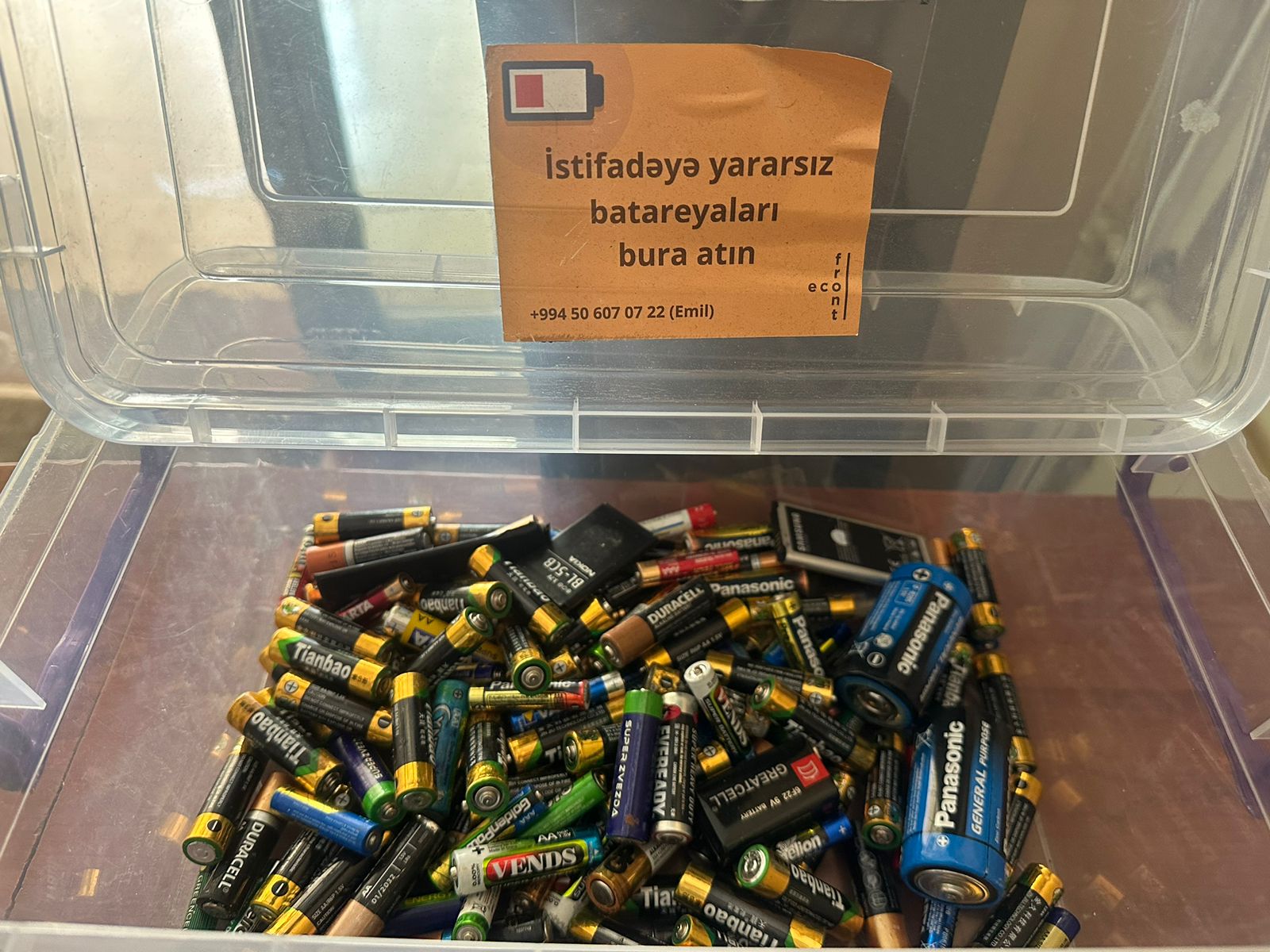
Partnership with Ecofront for Battery Decontamination and Disposal
In this context, ATMU collaborates with the NGO Ecofront to accomplish an "End-of-Life Battery Decontamination and Disposal Project." Within this framework, worn-out batteries are gathered on campus grounds and afterwards transported to "Hazardous Waste" LLC operating under the auspices of the MENR. The batteries are safely kept in specially insulated cells, and once the cells get filled, they are covered with insulating material so that all environmental hazards associated with batteries are effectively isolated. Such a partnership would not only reduce risks of pollution but also increase awareness in the ATMU community regarding safe disposal of harmful materials.
Spreading Awareness for Sustainable Practices and Environmental Responsibility
ATMU incorporates the issues of responsible consumption and environmental sustainability into its curriculum so as to enable students to understand the influence of consumption patterns on climate change and ecosystem health. Further, ATMU provides an avenue for students to raise discussions on the practice of sustainable practices and thinking in resources utilization that will make them good ambassadors in the espousal of sustainable consumption at both personal and professional levels.
https://atmu.edu.az/az/web/post/706
Future Initiatives for Reducing Environmental Impact
Element # 4 - Sustainability Practices: The mission is to pursue further sustainability initiatives with actions that reduce waste through resource efficiency. Any potential initiative in the future would involve efforts for the reduction of single-use plastics, coming up with best practices for energy efficiency, and encouraging students and staff to minimize their impact on campus.
These activities and collaborations show the active implementation of SDG 12 by ATMU through the promotion of responsible consumption and production. By building a culture of environmental responsibility through the establishment of a sustainable waste management system, ATMU contributes to global goals on pollution reduction, biodiversity protection, and climate change mitigation.
Issued in: 14.09.2023 | Version 01
Revised: 16.09.2024 | Version 02